The most common mistake we see on Southampton sites is assuming that a few passes with a roller will sort out the fill. It won't. Beneath the surface, the city sits on a patchwork of River Terrace Deposits, brickearth and thick made ground overlying the Bracklesham Group, and when you load it, loose granular layers settle unevenly. We have pulled cores where the SPT N-value doubled after treatment, yet the contractor had already poured the blinding. Our vibrocompaction design service stops that before it starts. We map the target zone, define probe spacing and energy input, and give the ground improvement contractor a clear specification backed by CPT testing correlations and post-treatment verification. For projects along the Itchen or in the docks, where the water table is barely a metre down, we often combine the design with a liquefaction assessment to confirm the densified soil meets the performance criteria under seismic demand.
Good vibrocompaction design turns a marginal Southampton site into a stiff, predictable formation — without removing a single lorry load of spoil.
Technical details of the service in Southampton
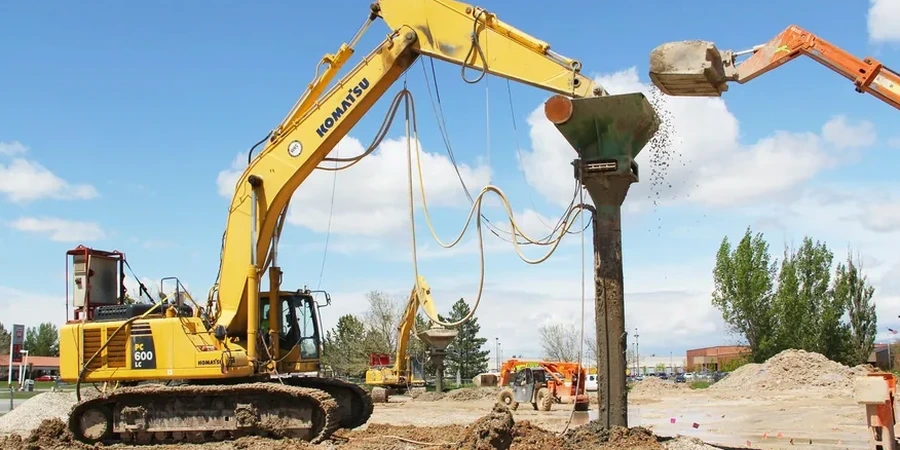
Risks and considerations in Southampton
One thing we see repeatedly in Southampton is untreated fill beneath industrial slabs: the floor looks fine for six months, then the joints open up and forklifts start bouncing. The culprit is almost always loose granular fill that was placed in thick lifts without proper compaction, sitting above a fluctuating water table that exacerbates the problem with every tidal cycle. A vibrocompaction design that ignores the groundwater regime — particularly in the docks, where the level swings with the double high water of the Solent — will underperform. We model the pore pressure response during and after treatment and set the verification window accordingly. Miss this step, and your post-treatment CPT will look brilliant on day two and mediocre on day twenty. For structures with settlement-sensitive equipment, we also check the risk of densification-induced settlement in adjacent loose layers that might not be reached by the vibrator.
Our services
Our Southampton vibrocompaction design package covers the full workflow from feasibility to verification, and we tailor the deliverables to the procurement route — whether you need a performance specification for a design-and-build ground improvement contract or a detailed method statement for a traditional tender.
Ground improvement specification and design
We produce probe layout drawings, energy and spacing parameters, target acceptance criteria and a verification testing plan. The package references BS EN 14731 and is ready to issue to specialist vibro contractors.
Post-treatment verification and reporting
We supervise the trial zone and production verification using CPT, SPT and shear-wave velocity testing, then compile a compliance report that demonstrates the treated ground meets the design assumptions for bearing capacity and settlement.
Questions and answers
How much does vibrocompaction design cost for a typical Southampton site?
For a stand-alone design package covering a single structure or building plot, our fees in the Southampton area generally range from £1,330 to £3,610, depending on the treatment area, depth and the number of verification stages required. A larger industrial scheme with multiple trial zones and phased verification will sit toward the upper end of that bracket. The cost includes the desk study, design calculations, probe layout drawings and the specification document.
Which Southampton ground conditions suit vibrocompaction, and when should we consider stone columns instead?
Vibrocompaction works best in clean, free-draining sands and gravels with a fines content below about 15 percent — conditions common in the River Terrace Deposits and some areas of made ground along the Itchen corridor. When the brickearth or silty made ground is thicker than a metre or so, or the fines content exceeds 20 percent, pore pressure cannot dissipate quickly enough during vibration and the method loses efficiency. In those cases we would normally recommend a stone column design instead, which displaces and reinforces rather than relying on vibration alone.
What verification testing do you specify after vibrocompaction in Southampton?
We typically specify a combination of CPT and SPT testing on a grid that is tighter than the treatment grid, with at least one test per 200–300 m² of treated area. The CPT gives us a continuous profile of tip resistance and friction ratio, while the SPT provides a direct check on relative density. For critical structures we also include shear-wave velocity profiling to confirm the small-strain stiffness improvement. All testing is timed to allow for any pore pressure equalisation, which in Southampton's tidal groundwater regime may require a rest period of three to seven days after treatment.