The tidal reach of the River Test creates a unique geotechnical puzzle for anyone working with shallow foundations in Southampton. You can move half a mile and go from dense gravels capable of 350 kPa to soft alluvial clays that struggle with half that. The city sits on a mosaic of Wittering Formation sands, London Clay outcrops, and thick sequences of River Terrace Deposits laid down during the Pleistocene — materials that look similar in a trial pit but behave completely differently under load. We’ve seen projects near the docks where groundwater fluctuates two metres between low and high tide, directly affecting undrained shear strength. Designing a footing here without understanding that interaction is a gamble. Our lab runs the full suite of classification and strength tests — from Atterberg limits to consolidated-undrained triaxial — so the bearing capacity figure on your drawing is backed by real local data, not a generic textbook assumption. Before breaking ground on the reclaimed zones east of the Itchen, it’s worth reviewing how a plate load test can validate the design parameters on the actual formation level, especially where fill thickness varies unpredictably.
In Southampton, the difference between a 0.8 m and a 1.5 m footing often comes down to whether you sampled the right layer of River Terrace Deposits.
Technical details of the service in Southampton
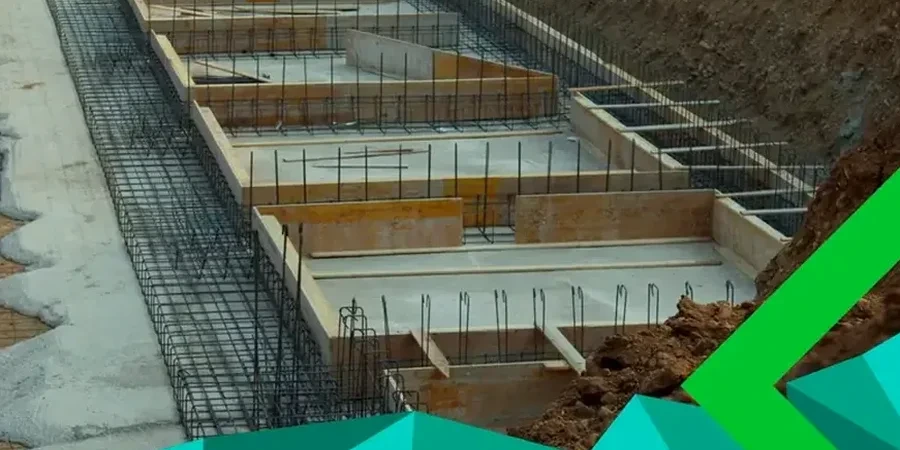
Field demonstration
Risks and considerations in Southampton
Eurocode 7 requires that we check both ultimate and serviceability limit states, and in Southampton the serviceability check often governs. The city’s geology includes soft organic silts within the alluvial sequence of the Test and Itchen floodplains — materials that can consolidate significantly under modest bearing pressures. We’ve investigated sites where a perfectly adequate factor of safety against bearing failure masked a predicted settlement of 40 mm, well beyond the 25 mm typically tolerated by masonry-clad structures. Another local hazard is the presence of relict scour hollows filled with loose, water-lain sands that are difficult to detect with widely spaced boreholes. A footing spanning the edge of such a feature can knowledge differential settlement severe enough to crack a slab within the first year. The solution is not over-design but targeted investigation: a combination of closely spaced dynamic probes to map the bedrock profile and laboratory consolidation tests run at the correct stress range for the proposed foundation geometry.
Our services
A shallow foundation design package for a Southampton site has to address the specific ground risks we encounter across the city’s varied geology. The activities below reflect the practical steps we take from initial investigation through to design parameter confirmation.
Bearing capacity calculation
Analytical and numerical bearing capacity assessment using drained and undrained parameters from site-specific lab testing, following Annex D of BS EN 1997-1 for spread foundations.
Settlement analysis
One-dimensional and three-dimensional consolidation settlement predictions using oedometer-derived mv and Cv values, with layered soil models reflecting the interbedded clays and silts of the Hampshire Basin.
Groundwater assessment
Monitoring of tidal groundwater fluctuations and pore pressure regime to inform buoyancy checks and effective stress calculations for foundations near the River Test and River Itchen.
Concrete class specification
Sulphate and pH testing of soil and groundwater samples to specify Design Chemical Class (DS Class) for buried concrete in accordance with BRE SD1 and BS 8500-1.
Questions and answers
What ground conditions in Southampton most commonly affect shallow foundation design?
The variability is the main challenge. River Terrace Deposits can shift from clean gravels to silty sands within a few metres horizontally. The London Clay in Southampton is generally stiff but can contain silt partings that reduce its drained strength. In the city centre and near the docks, made ground and relict alluvial channels filled with organic silt create soft spots that require careful mapping. The tidal influence on groundwater also means that effective stress conditions can change significantly between site investigation and construction.
What is the typical cost range for a shallow foundation design package in Southampton?
For a typical residential or light commercial project, a complete design package including ground investigation, laboratory testing, and bearing capacity/settlement analysis runs between £1,320 and £2,380, depending on the number of trial pits or boreholes and the testing schedule required. Sites with complex ground conditions or those needing additional consolidation testing will fall toward the upper end.